
3 November 2026
Glass Collection Principles in Practice: Three Perspectives from Across Europe
What does good bottle bank collection look like in practice? Three glass collection and recycling professionals share their experience of protecting glass quality, improving collection efficiency and making recycling easier for citizens.
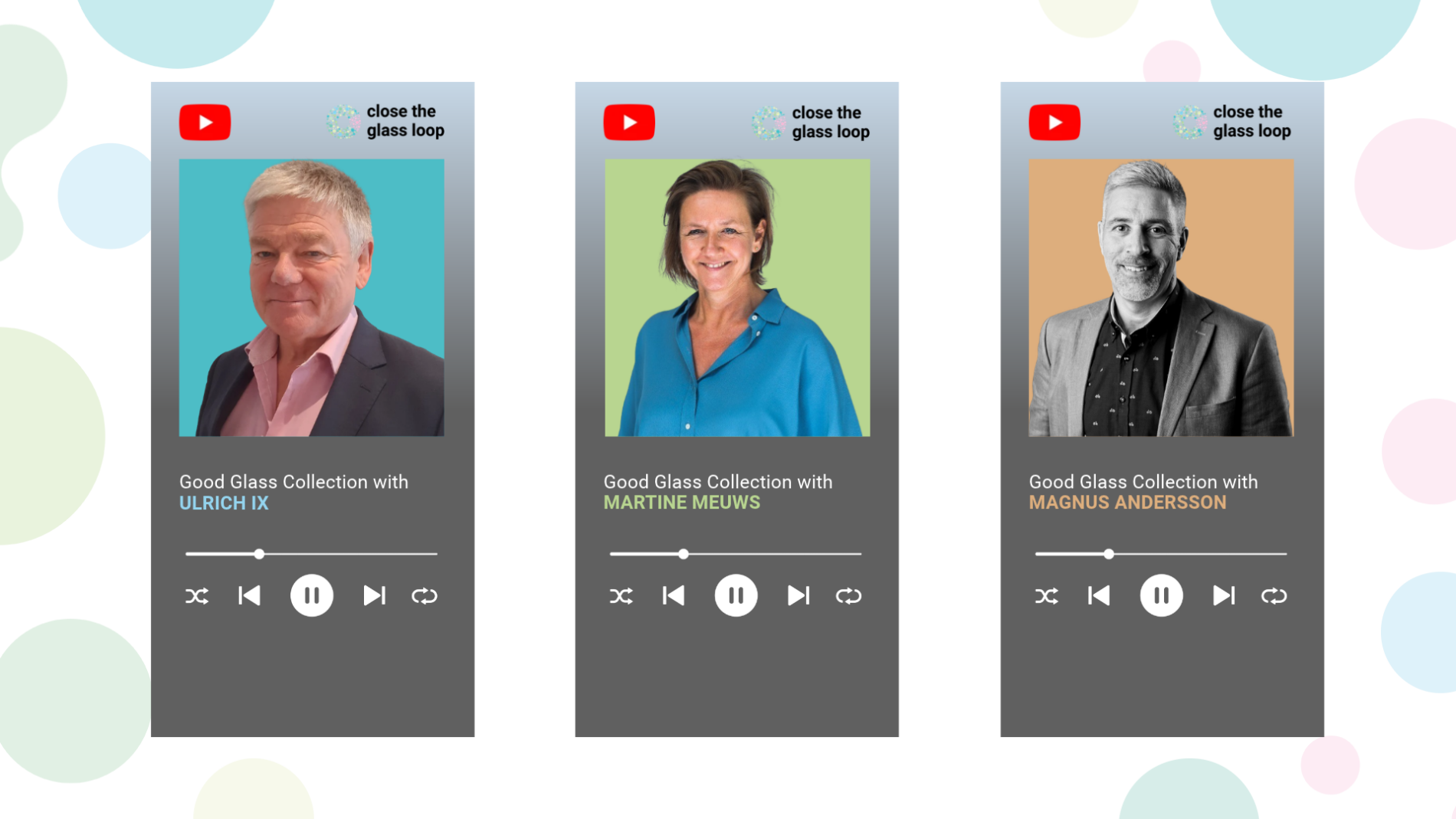
High-quality glass recycling starts long before glass reaches the recycling plant. It starts at the point of collection.
Getting bottle bank collection right means making the system convenient for citizens while ensuring that the glass collected remains clean and suitable for high-quality recycling. From the location and maintenance of collection points to transport, storage, contamination prevention and communication with citizens, decisions made throughout the collection process can affect the quality of the material that ultimately reaches recyclers.
This is the thinking behind the Principles for Good Bottle Bank Collection of Glass Packaging, developed by Close the Glass Loop to bring together practical recommendations for effective glass collection.
But what do these principles look like in practice? We spoke with three professionals working across glass collection, logistics and recycling in Europe. Drawing on their experience in Belgium, Sweden and the wider European glass recycling sector, they share practical perspectives on how better collection can support better recycling.
Quality starts at the bottle bank: Ulrich Ix
Good recycling begins with good-quality material.
In our first conversation, Ulrich Ix of FERVER looks at the relationship between collection and the quality of the glass that reaches recyclers.
One important element is convenience. Bottle banks need to be accessible and positioned where people can use them easily. At the same time, the collection system needs to preserve the quality of the glass once it has been deposited.
That means paying attention not only to what citizens put into the bottle bank, but also to what happens afterwards. How glass is collected, handled and transported can influence both contamination and breakage.
Ulrich also highlights the importance of communication. Helping citizens understand how glass recycling works, and why correct separation matters, is an important part of creating a collection system capable of delivering high-quality recycled glass.
The takeaway: The quality of glass recycling depends on the quality of the material entering the recycling process.
Keeping collected glass clean: Martine Meuws
Once glass has been deposited correctly, maintaining that quality becomes the next challenge.
Martine Meuws of GRL Glass Recycling & Logistics takes us behind the scenes of glass collection in Belgium, looking at what happens between the bottle bank and the glass cullet recycling facility.
A central issue is contamination. Materials such as stones and ceramics can create problems for glass recycling, making clean bottle bank sites and storage areas particularly important.
Martine explains how operational choices can help protect collected glass throughout the process. Transfer stations, appropriate equipment, driver training and effective route planning all play a part in making collection work efficiently without compromising material quality.
Citizens are part of that chain too. Clear communication about what belongs in a bottle bank, and what does not, can prevent contamination before it occurs.
The takeaway: Maintaining glass quality is a continuous process, from the bottle bank through collection, storage and transport.
Making it easy to do the right thing: Magnus Andersson
How do we combine high-quality collection with a system that is simple and convenient for citizens?
For Magnus Andersson, Managing Director at Svensk Glasåtervinning AB, the answer can be summarised in one sentence.
“It should be easy to do the right thing.”
Drawing on Sweden’s experience with glass collection and recycling, Magnus explains that well-designed bottle banks can help minimise glass breakage and contamination, but the collection point itself also matters. Clean, well-maintained and properly lit sites, combined with clear instructions, make it easier for citizens to participate correctly.
Technology can support this system. Magnus points to container-level sensors and route planning as practical ways of improving collection efficiency. At the same time, good handling practices, clean collection vehicles and proper training can help maintain the quality of the glass throughout collection and transport.
While technology and infrastructure matter, communication remains essential. When citizens understand what to do and the collection system makes that behaviour easy, good glass collection becomes part of everyday life.
Different perspectives, one objective
The three interviews look at glass collection from different points in the value chain, but several common themes emerge.
Make collection convenient.
Bottle banks should be accessible and easy for citizens to use.
Protect material quality.
Glass needs to remain as clean as possible throughout collection, transport and storage.
Prevent contamination.
Good infrastructure, careful handling and clear guidance can help keep unwanted materials out of the glass stream.
Make logistics work smarter.
Route planning, appropriate equipment, training and technologies such as fill-level monitoring can help collection systems operate efficiently.
Communicate clearly.
Citizens need simple and consistent information about what belongs in glass collection and why correct sorting matters.
Together, these measures support a simple goal: collecting more glass while maintaining the quality necessary to recycle it effectively in a closed loop.
Putting the Glass Collection Principles into practice
Good bottle bank collection depends on many decisions working together, from where a bottle bank is placed and how clearly it is labelled to how glass is transported, stored and delivered to a recycler.
Explore the Principles for Good Bottle Bank Collection of Glass Packaging and discover practical recommendations for improving the quality and efficiency of glass collection.