
25 September 2026
Towards a Close the Glass Loop Action Plan for Bulgaria
On 16 September 2026, ECOBULPACK Bulgaria, BA Glass, and Close the Glass Loop brought together representatives of the glass packaging value chain in Sofia for the international workshop “Towards a Close the Glass Loop Action Plan for Bulgaria”. The event marked the establishment of the Close the Glass Loop National Platform in Bulgaria and initiated a structured dialogue on how to increase and improve the collection and recycling of glass packaging in the country.

The workshop brought together 50 European and Bulgarian stakeholders from the glass packaging industry, EPR organisations, recycling and waste management, sector representatives, policymakers, municipalities and others. The discussions focused on the implications of evolving European and national legislation, examples of effective collection and recycling systems from across Europe, and the priorities for a future Bulgarian National Action Plan for glass packaging collection and recycling.
European Policy Context

The morning opened with a panel discussion on the impact of new European and national legislation on packaging and packaging waste on glass containers, bringing together perspectives from the European Container Glass Federation (FEVE), the Extended Producer Responsibility Alliance (EXPRA) and the European Committee of Wine Companies (CEEV).
The discussion highlighted the importance of coordinated implementation of the Packaging and Packaging Waste Regulation (PPWR) across the value chain, outlining its main impacts on glass packaging and the implications for each sector.
Vanessa Chesnot, Head of Public Affairs & Product Policy at FEVE, described PPWR as a game-changer for rethinking all packaging. Although glass is already a circular, 100% recyclable material, there is still room for improvement. The main challenges for the industry lie in implementation uncertainties, particularly around packaging minimisation and ensuring that design creativity remains possible in glass production.
From an EPR perspective, José Manuel Núñez-Lagos Bau, Director General of Ecovidrio, explained that the primary goal is supporting clients and partners through the PPWR implementation phases to reach compliance. For EXPRA, key priorities include simplification and greater flexibility, such as adaptable rules for labelling text and colours.
For the European wine industry, Ignacio Sánchez Recarte, Secretary General of CEEV, emphasised that glass packaging is an integral part of the product, as consumers frequently choose wine based on its presentation. The sector faces challenges with PPWR implementation, including compliance documentation that risks blocking high-quality wines from the market and new labelling rules that could disrupt the single market.
Bulgarian stakeholders actively joined the discussion, sharing how national sector representatives are preparing for the implementation of European legislation. For the food and beverage sector, key issues include the responsibilities of retailers with their own brands and the new labelling rules. The discussion also underlined the need for practical solutions that work across the value chain and avoid unnecessary complexity for businesses.
Deposit Return Systems (DRS) were another important topic. Participants exchanged views on the role of DRS in increasing collection performance, including whether glass packaging should be in scope. Speakers noted that different collection models can deliver high performance depending on the national context and that, where effective separate collection for glass already exists, continued development and optimisation of these systems should remain a priority. They also pointed to the specific logistical challenges of glass in DRS, noting that products in jars or larger bottles, such as wines and spirits, will remain dependent on the municipal bring-bank system.
European Experience and Practical Solutions
The second part of the morning showcased how stakeholders across Europe are working to improve post-consumer glass collection and recycling.
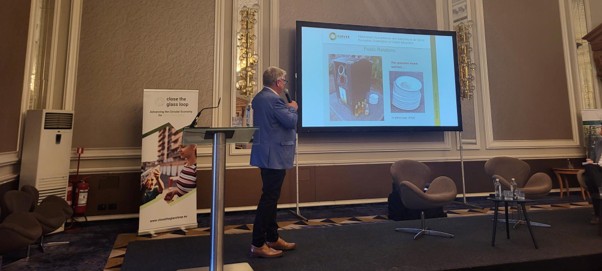
Ulrich Ix, President of the European Federation of Glass Recyclers (FERVER), presented the perspective of the cullet treatment industry, highlighting the importance of delivering high-quality, furnace-ready cullet for closed-loop recycling. He addressed key contamination challenges such as ceramics, stones, porcelain and other non-glass materials, as well as emerging ones like batteries. He also stressed the importance of colour separation and the need to invest not only in recycling infrastructure and technology, but also in communication and public awareness.
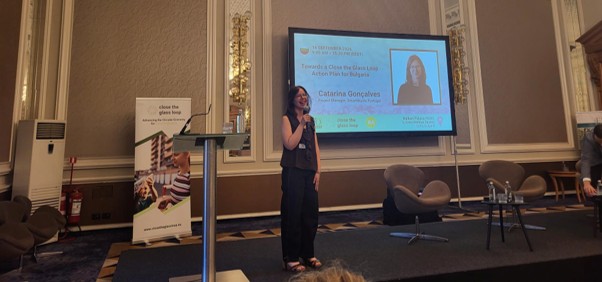
Catarina Gonçalves, Project Manager at Smart Waste Portugal, presented the Vidro+ Platform and its key activities. She explained its value chain approach, bringing together public authorities, EPR organisations, waste management operators, producers and brands around a shared goal of 90% collection for recycling of glass packaging by 2030, in line with Close the Glass Loop. Her examples showed how a national platform invests in practical projects in a country with recycling rates below legal requirements, including HoReCa collection, digital solutions, local collection improvements and citizen engagement.
José Manuel Núñez-Lagos Bau, Director General of Ecovidrio, shared the experience of Spain, where a single PRO manages the recycling of all glass packaging waste. He presented their work on cooperation between EPR and local authorities, as well as digital tools, innovations and targeted measures to further improve collection performance and mobilise citizens.
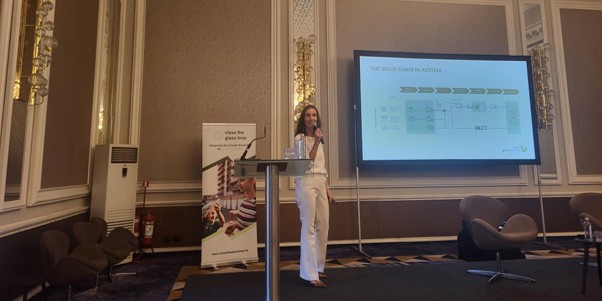
Eva Koller, Managing Director of Austria Glas Recycling, presented the Austrian experience, highlighting strong cooperation with municipalities and government, clear and convenient collection systems, citizen participation and a reliable network of collection and recycling partners. Their initiatives focus on optimising collection infrastructure, improving services for small businesses, reducing transport distances and emissions, and enhancing data management through digital tools such as the GlassFuture app. A key lesson: maintaining high collection performance in a mature system requires continuous optimisation and significant investment.
Identifying Priorities for Bulgaria
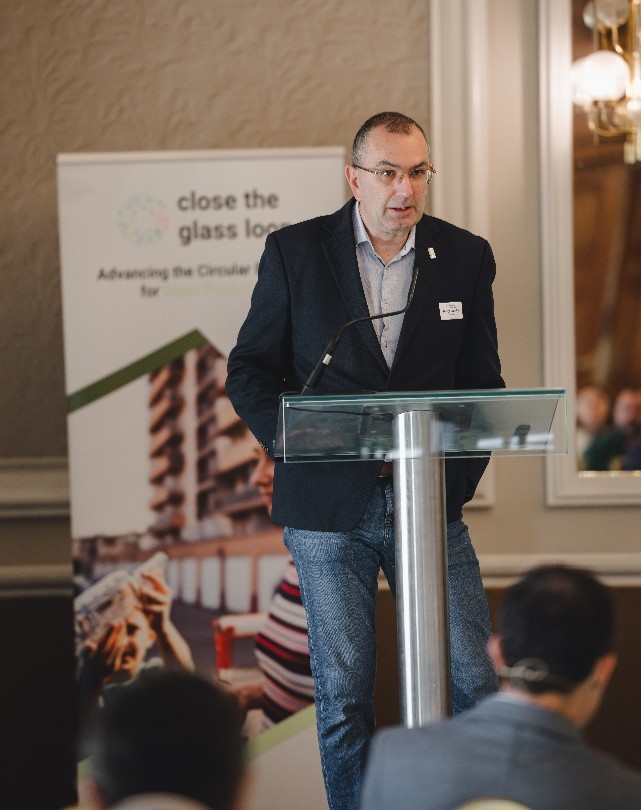
The afternoon session focused on the development of the Close the Glass Loop National Platform in Bulgaria, the national challenges, and potential priorities for a value chain action plan for more and better glass packaging collection and recycling.
Vanya Neycheva, Project Manager at Close the Glass Loop, introduced the Platform, its main priorities and activities at European and national level, and the role and benefits of a national platform.
Georgi Slavchev, Procurator at Ecobulpack Bulgaria, presented the national context, with an overview of the glass packaging collection and recycling system in Bulgaria, country-specific requirements and recent data. He pointed out several challenges including the need to implement the pay-as-you-throw principle, improve data collection, better collaboration with national and local authorities.
Stakeholder perspectives were also shared by Marco Marques, Managing Director for South-East Europe at BA Glass, who reaffirmed the high demand for cullet in glass production and the company’s commitment to being an active partner for higher closed-loop recycling, and by Nikolay Sidzimov of the Association of Municipal Ecologists in Bulgaria (ASEKOB), who placed glass collection in the context of limited municipal resources, growing waste management requirements and the need for actionable solutions at local level.
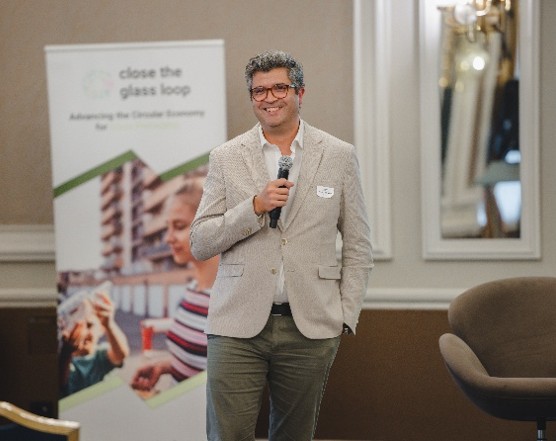

The discussion identified several topics that could form the basis of the Bulgarian Action Plan for glass packaging collection and recycling:
- Improving data collection and monitoring, including how collection coverage and performance are currently measured;
- Following the design and implementation of the future DRS and its interaction with existing glass collection;
- Strengthening cooperation with municipalities, recognising their central role in organising and monitoring separate collection and mobilising citizens;
- Supporting the implementation of the pay-as-you-throw principle to introduce financial incentives for citizens, drawing on experience from other European countries;
- Improving collection infrastructure and identifying where further investment or optimisation is needed;
- Reducing contamination, including ceramics, flat glass, bulbs and other materials;
- Increasing citizen awareness and participation through practical, engaging and coordinated communication on proper sorting, and by building trust in the recycling system;
- Strengthening HoReCa collection, including dedicated solutions for cleaner and more efficient collection from the hospitality sector;
- Strengthening dialogue with policymakers on key legislative measures;
- Enabling value chain collaboration, with glass manufacturing, waste management, EPR, municipal, sectoral and other perspectives reflected in future actions.
Next Steps
While participants highlighted different challenges, there was a shared interest in increasing the quantity and quality of glass collected for recycling, improving coordination across the system, and returning more cullet to production. The workshop in Sofia was not a one-off event, but the starting point for a structured value chain approach to improving glass collection and recycling in Bulgaria.
